
My System
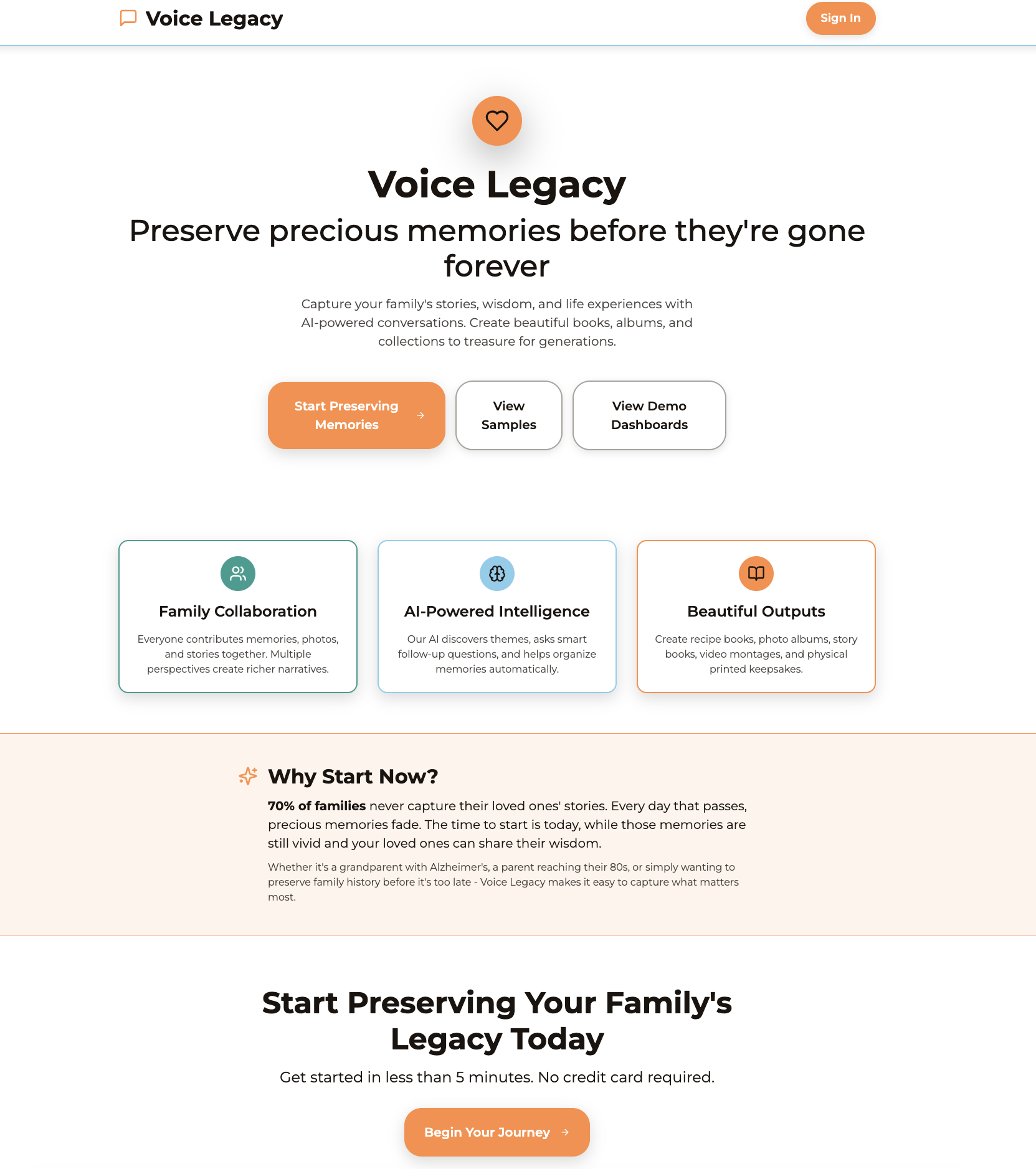
Voice Legacy is a production AI platform with real users and real revenue. I built it and run it without hiring anyone. People keep asking how, so I wrote it down.
Why Solo?
For the First Time in History, It's Possible
A year ago this wasn't feasible. Now I can build production software, run marketing, handle support, and manage finances—all with AI as my multiplier. The tooling finally caught up to the vision.
Iterate Fast, Then Scale
I can move faster alone than any team with coordination overhead. Get traction first. Prove the model works. Then hire or find a cofounder after raising funds. The order matters.
No One Can Match My Energy Yet
This isn't a side project. My father died and I couldn't capture his stories. That loss drives everything. I know how this product should work because I needed it and didn't have it. No hire will ever care as much as I do—not yet.
Development
How I Work
Claude Code runs in Cursor and VS Code. I stay in concept-space—describing features, reviewing code, making architectural calls. Claude handles the syntax. 434 commits in 3.5 months, and I haven't written a for-loop by hand since October.
The Numbers
98,000 lines of TypeScript. 6 AI agents orchestrating conversations, extracting memories, writing stories. Full auth, billing, voice pipeline, semantic search. 107 features across 12 categories. All shipped by one person who used to just write PRDs.
QA & Evals
LLM Eval Framework
I built a custom evaluation system for the AI agents. Persona-based test scenarios with fake users (Maria Santos, James Mitchell). 100-point rubric across 9 dimensions. LLM-as-judge scoring narrative quality. Voice authenticity checks—James uses Southern Black vernacular, and the system verifies it sounds right.
Full eval run: 15-30 minutes, about $1. With Opus: 45-60 minutes, ~$5.
Automated Reviews
Two cron jobs run every morning while I sleep:
Picks next section of codebase, flags bugs, dead code, refactoring opportunities. No changes—just documents issues for me to review.
Runs security audit skill, checks for vulnerabilities, documents findings.
Design
Tools
- →v0 (Vercel) for rapid UI prototyping
- →Tailwind CSS for all styling
- →Mobile-first responsive design
- →No Figma. Straight to code.
Process
I created a strongly opinionated componentized design system. Everything lives in code, not in design files nobody maintains. When I need a new component, I describe it to v0, tweak the output, and ship.
Marketing
The Content Pipeline
I trained the voice model on 40+ samples of my own writing. Substack posts, emails, even Reddit comments. It sounds like me, not corporate AI slop.
Infrastructure
- →n8n self-hosted on pallas (Docker)
- →Twitter posting: working
- →LinkedIn/Facebook: debugging (it's always OAuth)
Total marketing infrastructure cost: $21/month plus the time to set it up.
Finance & Billing
Stripe Setup
- →Customer auto-creation on signup
- →Subscription tiers: Free / Pro
- →14-day trial support
- →Webhook handling for subscription events
Accounting
Wave (free) for bookkeeping. Mercury for banking.
Monthly Operating Costs
Support
How It Works
The Approach
The first layer is OpenClaw, which is an AI assistant that monitors in-app feedback, triages issues, and responds or escalates. The complex issues come to me.
Current volume is effectively zero since I'm pre-launch, but the system is ready.
I Can Teach You This
I consult on AI-native operations for founders who want to ship faster, PMs who want to become builders, and companies that need to figure this out before their competitors do.